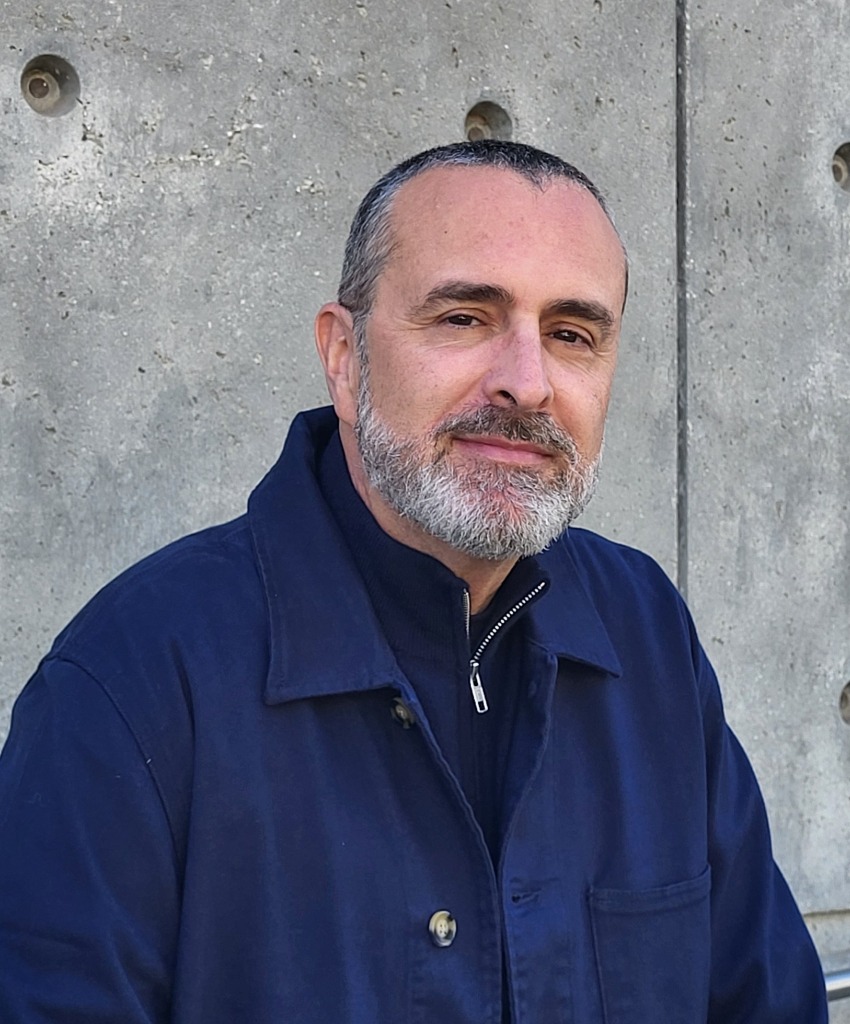
José
Marichal

Professor of Political Science • California Lutheran University

Investigating how algorithms and computational infrastructure restructure democracy, social contracts, and political power. Author of "You Must Become an Algorithmic Problem" (Bristol University Press, 2025) and forthcoming "Machine Liberalism" (Intellect / Univ. of Chicago Press, 2027).

CALIFORNIA LUTHERAN UNIVERSITY // 34.2257° N, 118.8781° W
José Marichal - Professor of Political Science
View Full Bibliography →
2027 • FORTHCOMING

Machine Liberalism

Algorithmic Power and Democratic Expectations

Intellect Books / University of Chicago Press

Investigating how pervasive AI systems, predictive analytics, and platform monopolies are fundamentally redefining liberal democratic expectations of citizenship, the state, and procedural justice.

Read Project Dispatches →
2012 • MONOGRAPH

Facebook Democracy

The Architecture of Disclosure and the Threat to Public Life

Routledge (Politics and Technology Series)

A seminal critique examining how Web 2.0 social architectures privatize public discourse, encourage performative consensus, and enclose democratic deliberation in algorithmic filter channels.

Monograph Archive →
Full Publication Record on CV →

Selected scholarly articles investigating algorithmic power, the social contract of predictive systems, computational text methods, and the restructuring of democratic public spheres.

01
JOURNAL OF LUTHERAN ETHICS • 2025/2026

Machine Certainty: Ellul, AI and the Crisis of Democratic Understanding

Applying Jacques Ellul's critique of technical determinism to modern autonomous models, evaluating how predictive algorithmic certainty forecloses civic deliberation, moral humility, and democratic contingency.

Read Article ↗
02
COMMUNICATION +1 • 2025

Data Rights Reconsidered: Reimagining Digital Freedom through Lefebvre's Right to the City

Reconceptualizing digital rights through Henri Lefebvre's spatial theory, arguing that individual privacy frameworks fail against planetary compute and advocating for collective democratic rights to inhabit and govern computational infrastructure.

Read Article ↗
03
INTERNATIONAL JOURNAL OF COMMUNICATION • 2024

Why Do Some Shout and Others Stay Silent? Communication Context Consistency

With Don Waisanen and Carrie Anne Platt. Examining consistency in political discourse across offline and online environments, measuring how platform affordances and perceived surveillance induce expressive polarization or defensive silence.

Read Article ↗
04
POLITICS & POLICY • 2023

Fracking Twitter: Utilizing Machine Learning and NLP for Policy Narratives

With Andy Pattison, Christopher Cherniakov, and William Cipoli. Deploying machine learning classifiers and natural language processing to extract advocacy coalition frameworks and causal policy narratives from large-scale social media text corpora.

Read Article ↗
05
JOURNAL OF INFORMATION TECHNOLOGY & POLITICS • 2020

The Social Media Commons: Public Sphere, Agonism, and Algorithmic Obligation

With Richard Neve and Brian Collins. Theorizing how commercial engagement algorithms undermine agonistic pluralism by amplifying moral outrage, and formulating algorithmic obligations to protect democratic public spheres.

Read Article ↗
View All Media & Podcasts →

Public-facing essays, podcast discussions, and media commentary translating theoretical critiques of algorithmic governance, data extraction, and artificial intelligence into public debate.

Full Curriculum Vitae →
CURRENT APPOINTMENT

Professor of Political Science

California Lutheran University (2004–Present)

Chair, Department of Political Science • Convener, Technology and Society Working Group • Thousand Oaks, California.

EDUCATION

Ph.D. in Political Science

University of Colorado-Boulder

M.A. in Political Science, Florida Atlantic University • B.A. in English/Communication, Florida State University

CORE EXPERTISE

Algorithms, AI & Political Behavior

Computational Politics • Platform Governance

Investigating the structural effects of algorithmic systems, automated recommendation, and AI on civic participation, voter behavior, and democratic discourse.